


Your freelance profile plays a key role in your client acquisition strategy. It’s often the first thing potential clients and recruiters will see, so it needs to make an impression. A strong freelance profile filters out the wrong clients and pulls in the right ones.
This guide covers what to include in a freelance profile, the mistakes that quietly cost freelancers work and what clients and recruiters actually look for first, based on freelancermap’s own company survey and insights from our session on profile optimisation at Freelance Unlocked 2026.
💡Recruiters reported in our survey spending an average of 43 seconds scanning a profile before deciding whether to make contact. Everything in this guide is built around making that 43 seconds count.
What should you write in your freelancer profile and how can it help you set yourself apart from other freelancers?
- Key takeaways
- What is a freelancer profile?
- What should I write in my freelancer profile?
- How to create a profile for freelance work: Tips to shine
- How companies say freelancers best prove their expertise
- What do clients check first?
- Freelance profile mistakes and red flags to avoid
- Good freelance profile examples
Join our freelancer community today!
Create your profile in just 2 minutes and start attracting new clients.
Key takeaways
- Recruiters spend an average of 43 seconds scanning a freelance profile before deciding whether to make contact — structure and scannability matter.
- A freelance profile works best when it’s optimised for two audiences at once: humans scanning, and platform search algorithms matching keywords.
- Clients consistently rank know-how (relevant skills/experience) and availability above photos, education, or certifications — but the “softer” details still build trust once a client is already interested.
- Specialisation outperforms generalism. In freelancermap’s company survey, businesses specifically flagged “does everything” profiles as harder to match and less convincing than clearly focused ones.
- Outdated information is the single biggest red flag clients report (27% named it their top concern), bigger than an incomplete profile, poor communication, or even a high rate.
- Most effective bios run 150–300 words; profile headlines run under 10 words.
- Update your availability and recent projects at least every 4–6 weeks, even without a new project to add.
- The single most common mistake is writing a profile that describes the freelancer instead of the outcomes they deliver for clients.
What is a freelance profile?
A freelancer profile is a structured, public-facing summary of a freelancer’s skills, experience, rates, and availability, used on freelance platforms and social networks to help clients evaluate and find independent professionals.
It typically combines different elements: headline, photo, bio, work history, portfolio, and testimonials into one page that clients scan to decide whether to make contact.
On freelance websites especially, having a complete and professional profile is essential to the success you might experience there. You need clients to notice your freelancer profile to win work with them.
Potential clients search for different freelance profiles on these platforms by typing the skills they need, the hourly rates they can afford, their location or the past clients those freelancers have worked with. Once clients discover a freelancer, they will contact them and present the project they need help with.
A freelance profile is public, searchable, and designed to generate inbound interest from clients you haven’t contacted yet.
What should I include in my freelance profile?
Having a freelancer profile means talking about yourself and what you’ve accomplished. We know this is not always easy!
For many, it’s hard to sell themselves, but as you probably know by now, doing so is an essential skill for freelancers.
Having a good freelance profile will ensure that your profile gets more views and will give potential clients a reason to trust you.
To attract high-quality clients, you need to convince them that you deliver high-quality work.
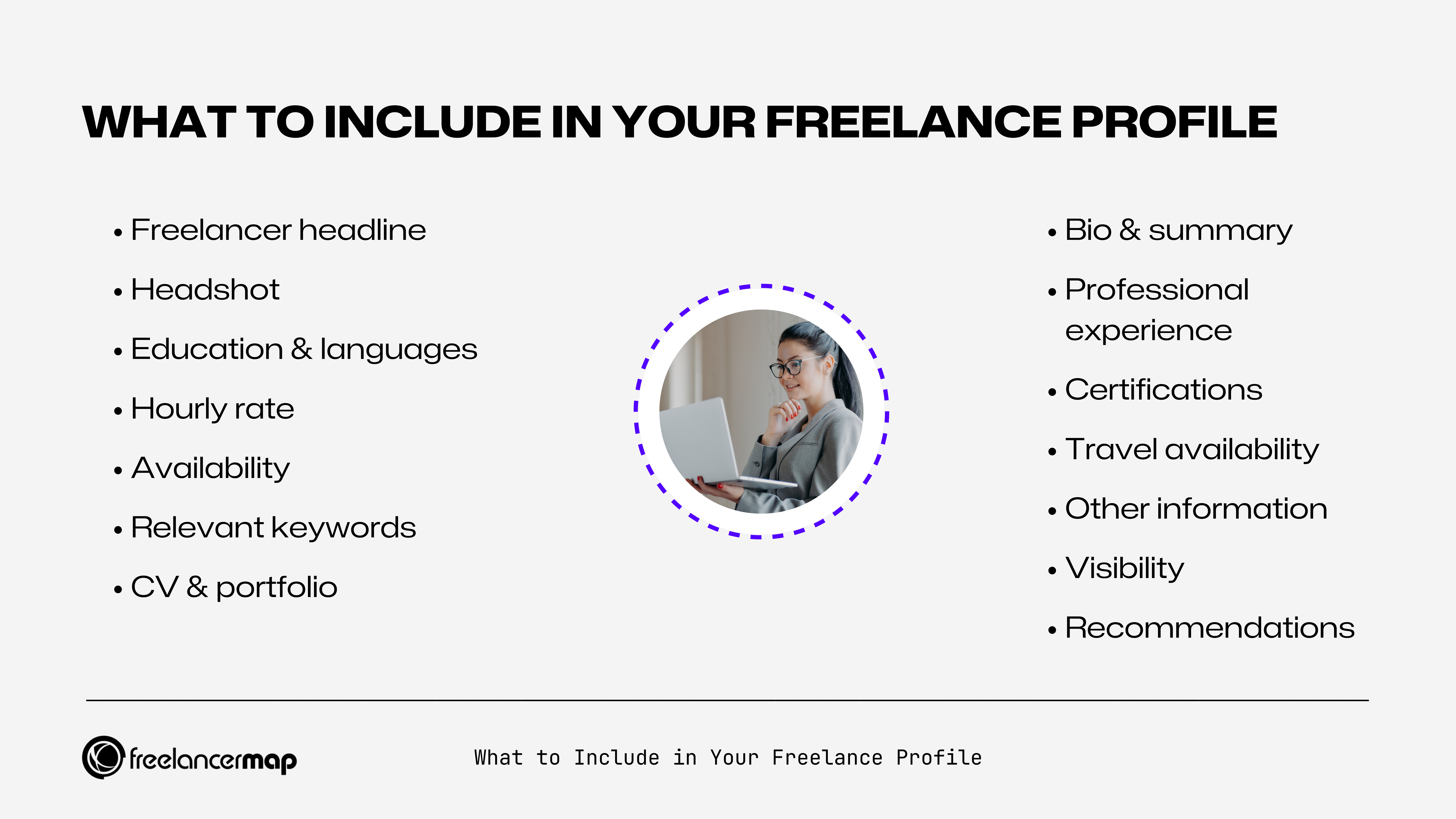
A complete freelance profile has 11 core elements. Each one plays a different role in either being found (search/matching) or being chosen (conversion once found).
| Freelance profile element | Role | Client priority* |
|---|---|---|
| Headline / Title | Search matching + first impression | High |
| Profile photo | Trust | Medium |
| Skills and keywords | Search matching | High |
| About me | Conversion | High |
| Professional experience | Conversion (proof) | High |
| CV | Conversion (proof) | High |
| Availability | Filtering | High |
| Freelance rates | Filtering | Medium |
| Certifications and education | Trust | Low-Medium |
| Recommendations | Trust (social proof) | Medium-High |
| Visibility | Discoverability | High |
It helps to think of these elements in two tiers, matching how clients actually read a profile:
- First glance (the first few seconds): headline, top skills, availability, and rate. This is what determines whether a client keeps reading at all.
- Closer look (once a client is already interested): bio, work history, certifications, education, and recommendations. This is what turns interest into an actual message or booking.
#1 Freelance headline: Your freelancer title
Your freelance headline is the short line that appears in search results and directory listings — often the only text a client reads before clicking.
Your freelancer title should summarise your skills, state your role and top 2-4 skills. Since first impressions are often decisive in a professional context, you should already stand out from the crowd here.
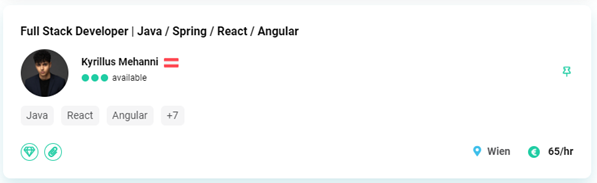
Freelance title examples: A client should immediately know what you can do and what you offer. An optimal profile title briefly summarises your expertise, for example:
- IT Consultant | Senior Software Developer (C++, Java, PHP)
- Web developer – Expert in learning systems (e-learning) – since 1998
- Expert in Web, API & Mobile App Development ( Native & Hybrid ) [ 100% Remote ]
- Agile Coach · Agile Project manager · Change Consultant
- IT-Consultant | Software Engineer | Data Specialist | Python, C++
- Business Intelligence / Azure / AWS / DevOps / CICD / SQL / Databases / Python / Java / Angular
- Fullstack Software Developer (.NET C# Python NodeJS) – AI, Medical Software Development
- Web Developer (PHP / Python) – WordPress Developer (WooCommerce / Plugins / Themes) – UX – SEO
❌ Weak example: Passionate professional who loves solving problems — describes an attitude, not a service.
#2 Freelance profile photo
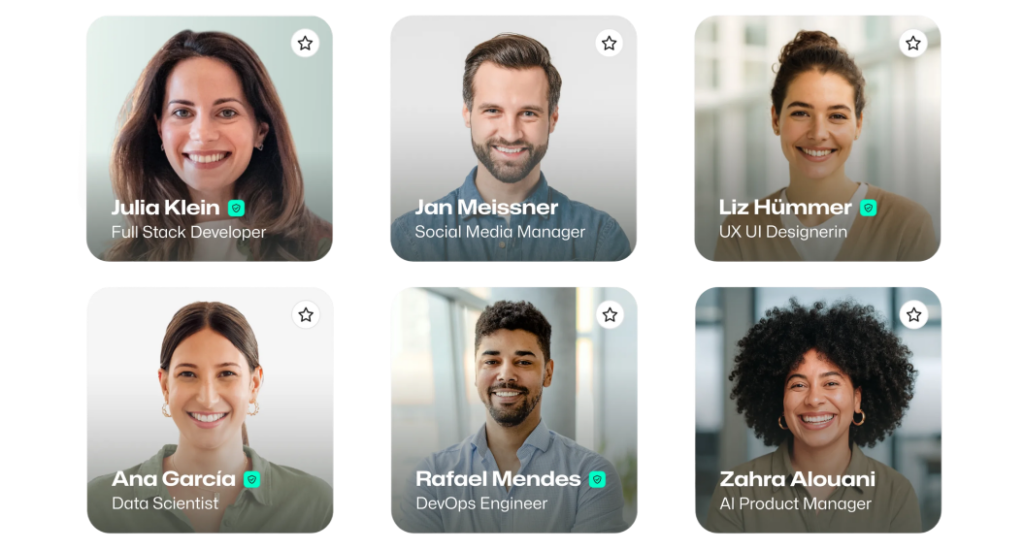
The next thing your freelance profile needs is a good professional headshot photo. A freelance photo shows potential clients exactly who they are dealing with – remember, your face is a part of your brand online.
It’s one of the first impressions clients will have, so presenting yourself as professional, capable, and friendly through an image matters.
Data from platform usage across freelance sites consistently shows profiles with a photo get more views than those without, largely because an anonymous avatar reads as an incomplete or inactive profile.
💡In freelancermap’s own company survey, a missing or unprofessional photo was cited by 11% of businesses as a red flag on its own.
#3 Skills and keywords: Your freelance bio
A freelancer is defined by their know-how and stands out from other candidates through specific expertise. This know-how can be expressed with a detailed bio and a complete summary of your expertise and skills.
The correct use of keywords enables recruiters and clients to more specifically target sought-after freelancers. For example, if you’re a developer, it’s advisable to list the programming languages you’ve mastered:
Example keywords (developer): Java | React | Angular | Spring | MySQL | Kafka | Docker
If you work in marketing, you could instead list keywords like “WordPress,” “SEO,” or “Google Analytics.”
Include both tool-based keywords (e.g., “Figma”) and outcome-based keywords (e.g., “conversion rate optimization”), since clients search using both patterns depending on how technical they are.
freelancermap’s company survey found that businesses specifically penalise “does everything” profiles: a broad, unfocused skill list makes it harder for a recruiter to judge fit and tends to reduce match quality, even when the underlying skills are genuinely strong.
If you have several distinct specialities, it’s generally more effective to lead with your strongest one and structure the rest by skill level, rather than listing everything with equal weight.
This isn’t only a client-side problem. In freelancermap’s 2026 Freelancer Study, 62% of freelancers said they’ve had to turn down projects because the work didn’t actually match their listed skills, a direct cost of listing skills too broadly or too vaguely just to appear in more searches. Listing only the skills you genuinely want to be found for reduces this mismatch on both sides.
💡Practical self-check: freelancermap suggests keywords based on your skills text; treat those suggestions as a diagnostic. If they’re consistently off-target, too sparse, or overwhelming in number, that’s a signal your skills section needs tightening.
Try it now: Log into your profile and edit your skills field — see which keywords freelancermap suggests based on what you’ve written, and adjust from there.
It’s important to talk your target client’s language. Browse open projects in your field and see which skills and keywords clients are actually asking for right now. It’s the fastest way to tell whether your skills field matches what’s currently in demand — or just what you think clients want.
#4 About me / summary
This is where you turn a list of skills into a case for hiring you.
On freelancermap, the free-text “about me” section functions as a first impression for the human reader, but the structured skills field is what search and matching algorithms actually index. Make sure your core skills live in the dedicated skills/keywords field.
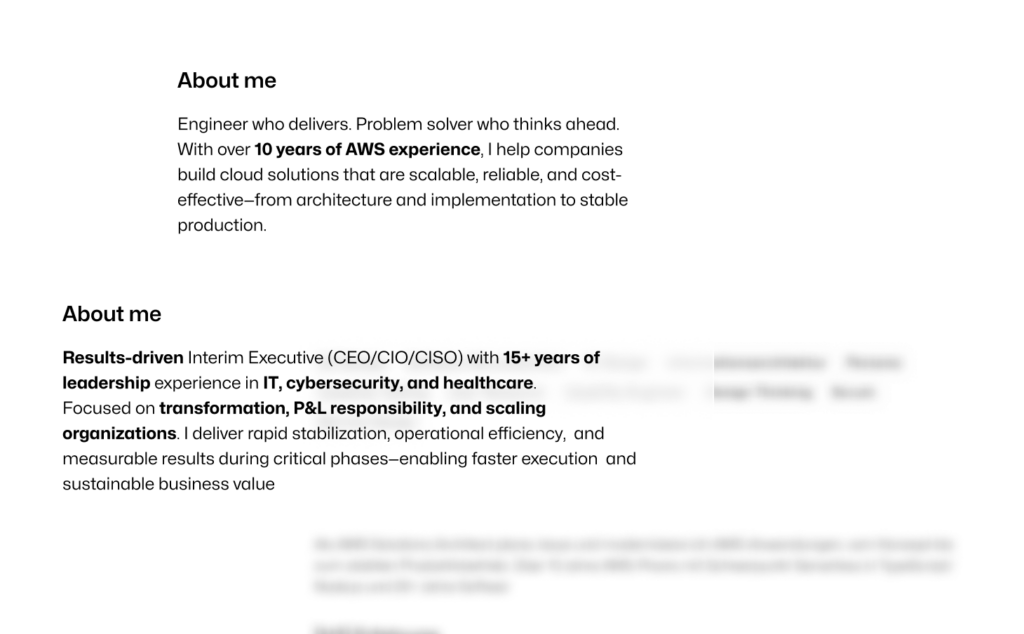
A strong summary should state a client outcome first and back it with specific numbers and names a client would search for.
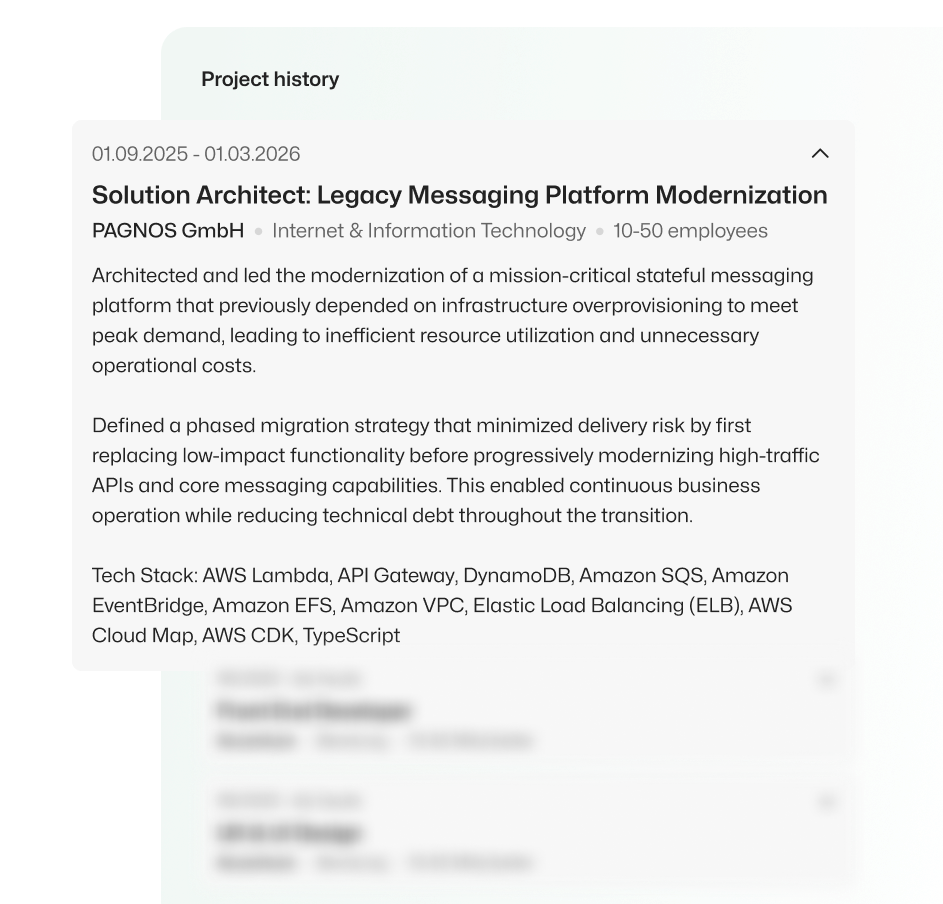
#5 Professional experience
Professional experience proves the above-mentioned skills and is another indicator of a freelancer’s know-how.
List past projects with: client (name if permitted, or industry if confidential), duration, and specific outcome or deliverable. Avoid vague entries like “various projects for various clients.”
A consistent structure is easier for a busy recruiter to scan than free-form paragraphs. For each project, use the same fields every time: client/industry, time period, role, project goal, tasks performed, and measurable result. Keep the list focused on recent, relevant work rather than a complete career archive. It’s fine to note that you’ve been active in a field for a long time, but weight the detail toward the last few years.
#6 CV & Portfolio (Attachments)
In addition to your project history, in which you can list past projects and jobs completed, you also have the option of uploading a current resume and a portfolio.
Upload your CV in an appropriate, easily-viewable file format (PDF is the safest default) and keep it as current as your profile. If you work with international clients, provide an English version alongside any local-language version, since recruiters often forward your CV directly to their own clients and it needs to stand on its own.
As for your freelance portfolio, it provides real proof that you can do what you say you can do. To win the projects you really want, provide relevant examples and showcase your expertise.
A portfolio is especially important for creative professionals such as designers and writers. It shows potential clients your tone and style so they can see whether those match their corporate style, too.
At freelancermap, you can also upload additional documents, including certifications, CVs in different languages, and past project summaries across different fields. Use this section to show whatever you feel will convince potential clients to hire you.
📎 Two minutes, done: Upload your CV now with our quick-create tool — freelancermap can pre-fill parts of your profile straight from it.
#7 Availability and workplace preferences
Companies need freelancers during specific time periods in which a project is to be completed.
Accordingly, recruiters pay attention to the availability of freelancers in order to weed out candidates who are not ready to work during those time periods.
This is why it’s important to update your availability constantly if you want project acquisition via portals and platforms to be successful.
State your current availability in concrete terms:
- “Available now”
- “Available from [date]”
- “Not available until [date]”
You should also define which types of projects you are open to, as recruiters might filter profiles based on this. Are you only interested in remote opportunities, or are you open to some on-site work as well?
#8 Freelance rates
Since clients often have a limited budget for a project, they pay close attention to your freelance rate, so we recommend including one.
However, whether to list rates publicly is a judgment call. On one side, it filters out budget mismatches before a call; on the other, it can anchor negotiations lower than necessary.
If you do list your freelancer hourly or daily rate, base it on your costs, experience level, and market rate for your speciality, and revisit it at least annually as your experience grows. Treat a published rate as a starting point for negotiation rather than a fixed number and consider whether an alternative pricing model (a project-based or outcome-based fee) might suit a particular engagement better than an hourly rate.
#9 Certifications and education
Adding certifications to your freelance profile shows clients that you possess the knowledge and know-how to get the job done. Getting certified by different institutions throughout your career shows that you care about what you do, and you will do your best to always deliver the best work to the latest standards.
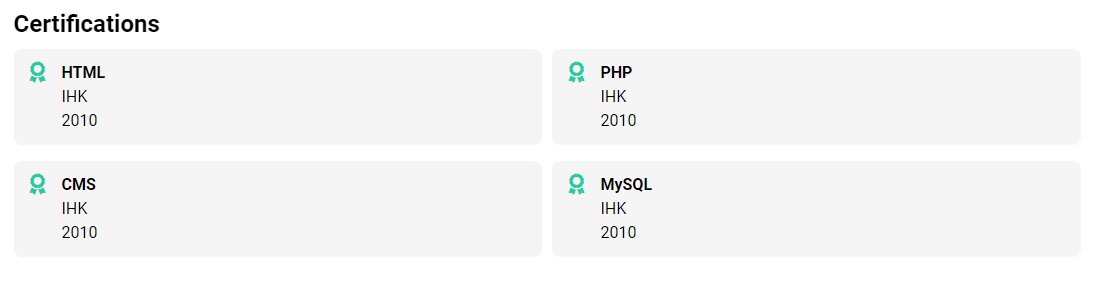
Certifications are useful for trust, in some fields (PMP, Scrum Master, SAP, cloud certifications), close to a hard requirement for certain clients. In freelancermap’s recruiter survey, certifications ranked below know-how and availability in initial screening, but they still matter once a client is comparing two similarly qualified freelancers.
When asked about the importance of certifications, only 17% of freelancers stated that being certified is what leads to success — so don’t fret if you don’t have one to showcase. Expertise and know-how come first; a network or certain certifications are a bonus, not a requirement, for success as a freelancer.

#10 Recommendations
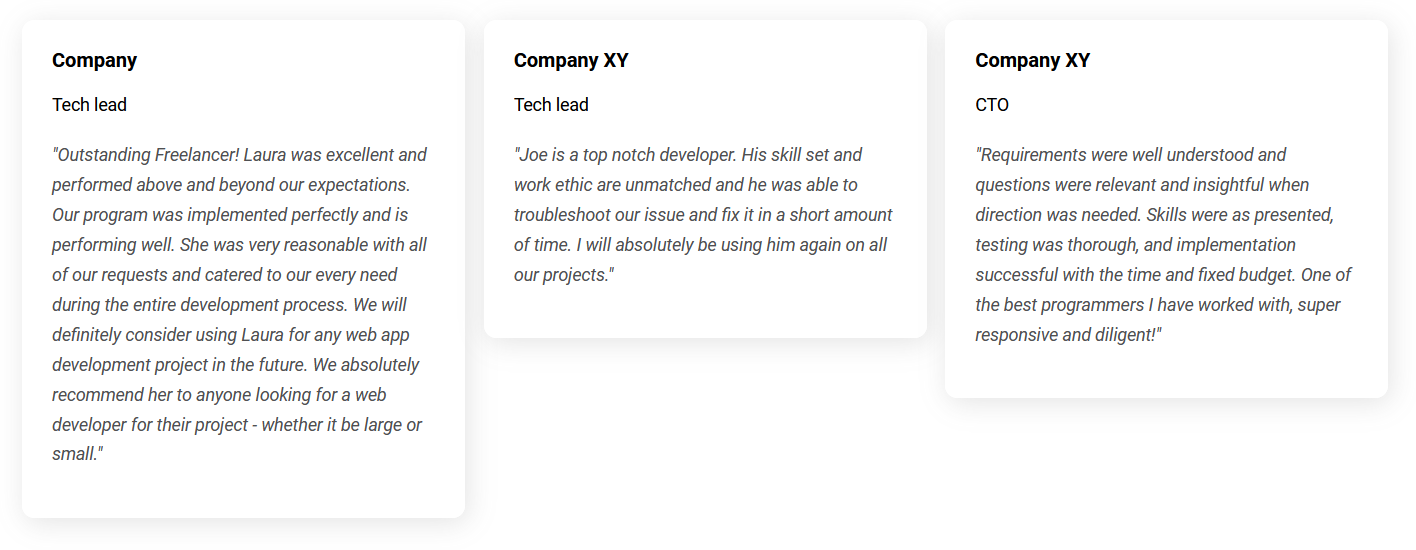
Recommendations, or testimonials, are powerful stories from past clients that freelancers can use to explain how successful the business relationship was.
Freelancers can use these stories to promote their services and sell them to new clients more easily.
When you’re trying to sell your product, people are naturally bound to see your personal bias. This means they trust the things you say less. But a good testimonial, coming from a real person who’s used your service doesn’t have that problem.
A few ways to collect recommendations on your profile:
- Email template ready to send – Put together an easy-to-use template for your clients to quickly fill out.
- Send in a recommendation draft (written by yourself) – Give them a ready-to-use draft that they can use as a starting point.
- Use past emails as testimonials (but always ask for permission first!)
- Social media reviews – Have clients leave recommendations on Twitter, Facebook or Linkedin, then use them in other channels
- Create a customer feedback form – Include basic questions that encourage clients to talk about the time spent working with you as a freelancer. You can use Google Forms for this.
#11 Visibility
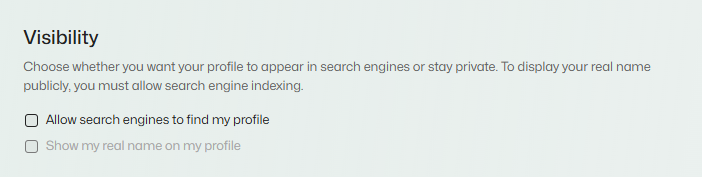
The visibility settings on your freelance profile let you decide who can view your information and who can’t.
A public profile will allow everyone on the platform and the internet to find you and reach you, whereas a private profile will limit your profile and reduce your reach.
On freelancermap, you have the option to go anonymous, too. Anonymous/skill-based visibility is commonly used by people freelancing on the side, alongside full-time employment, since it prevents an employer from finding the profile by name search.
How to write a freelance profile for freelance work: 8 tips
- Define your ideal client before you write anything. A profile written for “anyone who needs a developer” reads as generic. A profile written for “Series A startups needing a fractional backend lead” reads as specific, and specific converts better.
- Write your headline last, using your bio as the source. Draft the bio first, then compress its strongest sentence into a 6–10 word headline.
- Lead your bio with the outcome. Open with what clients get from working with you; save your history for the second or third sentence.
- List 8–15 specific, searchable keywords. Mix tool names and outcome terms (see section 3 above).
- Attach proof for every claim. Each skill or achievement mentioned in the bio should map to something verifiable in your portfolio, work history, or a testimonial.
- Keep it real. Try your best to make it clear to potential clients that it’s behind the account. Add a friendly profile photo, links to other accounts, or verify your profile – all of these will help.
- Proofread, then have one other person read it. Typos and awkward phrasing undercut credibility faster than almost any other single factor, especially for writing- or communication-based roles.
- Review your profile every 1-2 months. Update it immediately when your availability, or rate, or you complete a project worth adding to your history.
How companies say freelancers best prove their expertise
Freelancers sometimes assume certifications, references, or a polished “about me” section are what convince a client to reach out. Company survey data tells a different story.
When freelancermap asked 143 companies what actually convinces them a freelancer has the right expertise, the answers ranked as follows:
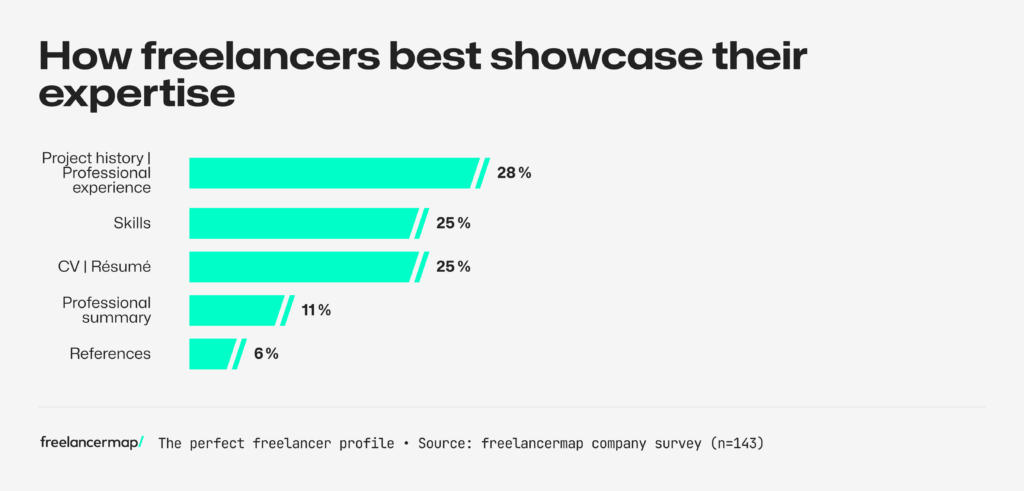
This means a documented project history and a clear, specific skill list do more persuasive work than a well-written “about me” paragraph or a stack of references. That doesn’t mean bios and testimonials are worthless, but if you have limited time to improve one part of your profile, your project history and skills list are the highest-leverage places to start.
✅ Act on it: If you haven’t touched your project history in a while, that’s the single highest-leverage 10 minutes you can spend on your profile today.
What do clients actually look for first?
Recruiters report scanning a profile in an average of 43 seconds before deciding whether to make contact. That reinforces the case for a clear, well-structured profile over a long, unstructured one.
Put skills and availability where they’re visible in the first few seconds of a scan.
There are 2 patterns worth knowing:
- Recruiters increasingly cross-check your profile against your CV — sometimes using AI tools to do it. If your profile and CV tell noticeably different stories about your experience, that mismatch is easy for a recruiter (or an AI matching tool) to spot. Keep both documents consistent and current.
- Smaller businesses and individual founders tend to weigh personal connection, soft skills, and communication style more heavily than large enterprise buyers or agencies, who often screen more mechanically on hard skills and availability first. If you mainly work with end clients rather than agencies, it’s reasonable to give soft skills slightly more visibility than a purely metrics-driven profile.
💡Know your target group. Are you writing for agencies or end clients? The two groups read profiles differently — recruiters often download CVs directly, while end clients take more time analysing the full picture. Think about how you present yourself to your target audience, and whether you can cover both without becoming too generic.
Freelance profile mistakes and red flags to avoid
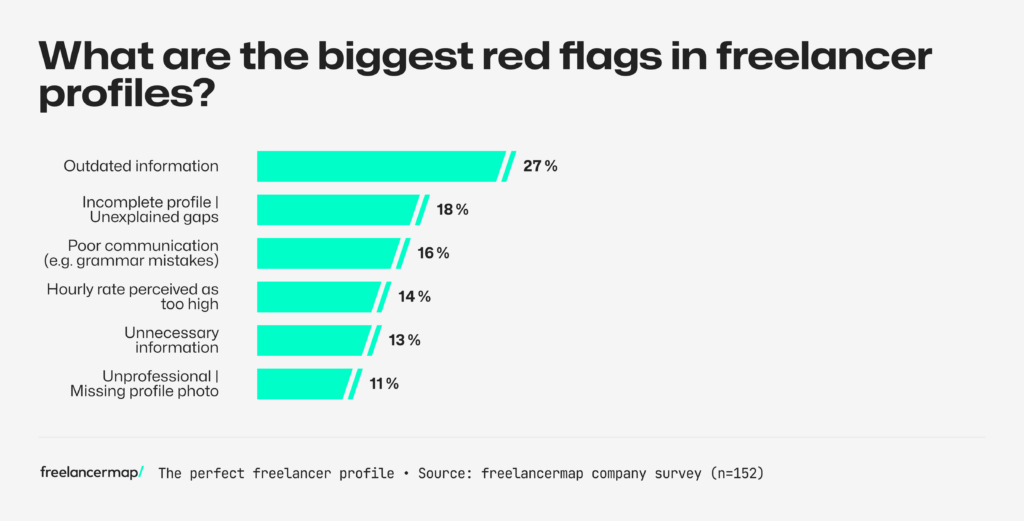
Outdated information is, by a clear margin, the top reason companies pass on a profile (27%), well ahead of rate concerns or a missing photo. If you only have time to fix one thing, fix your last-updated date, current availability, and most recent project.
Beyond these ranked red flags, a few additional mistakes are worth naming directly:
- Writing about yourself instead of the client’s problem. A bio full of personal passion statements, with no mention of what a client gets, reads as self-focused.
- Using a headline that describes a personality, not a service. “Passionate creative” tells a client nothing searchable.
- Skipping proof. Claims without a portfolio link, past project, or testimonial are harder to trust and slower to convert.
- Copy-pasting a generic AI-written bio without editing. Generic, unedited AI text often reads as impersonal and can blur into every other AI-written profile in the same search results. Use AI tools to draft or tighten language, but keep specific numbers, client types, and personal details that only you would know.
- Copying your CV directly into the skills field. Your CV should stay your CV; the skills/summary field is meant for a concise, matching-optimised snapshot, not a pasted document.
⏱️ 60-second fix: Open your profile right now and check one thing — when did you last update it? If it’s been more than 6 weeks, that’s worth fixing before you do anything else on this list.
Freelance profile examples
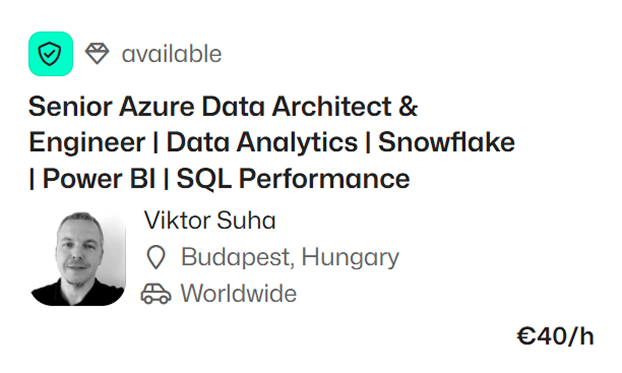
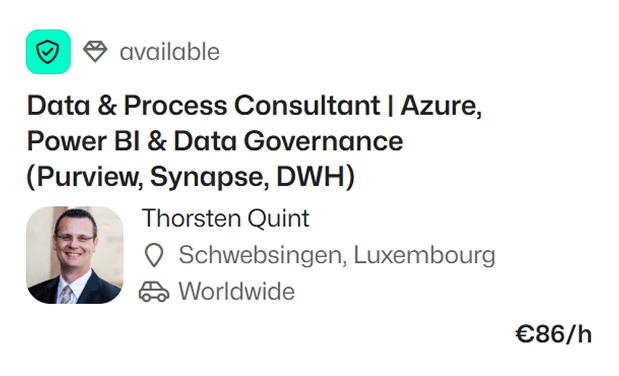
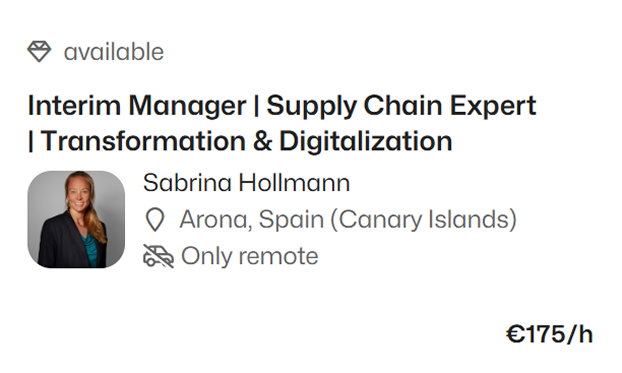
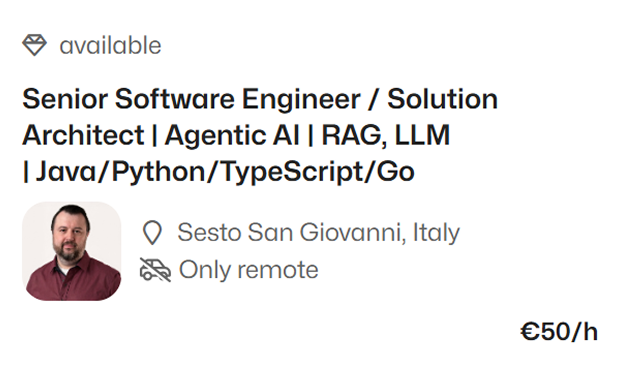
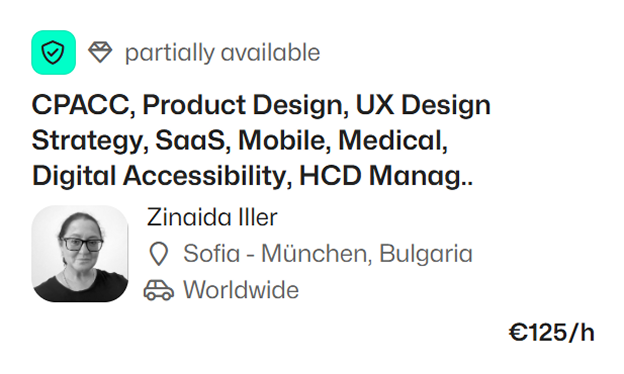
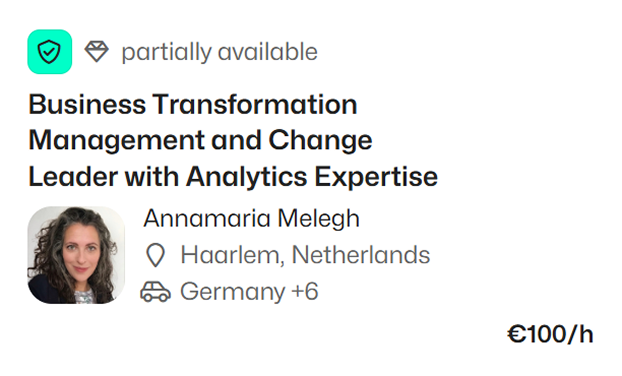
If you don’t know how to get started with your freelancer profile, we recommend that you search our freelancer directory for other professionals with a similar profile to yours (narrow your search by entering your skills) and see how they are presenting themselves.
Pay attention to what you like and what you don’t like: What keywords do they include? Do they use a direct tone or introduce themselves in a very formal way? What is their freelance rate?
Find your perfect combination and use it in your freelance profile.
Below, we’ve selected some profile examples in the different categories available on freelancermap:

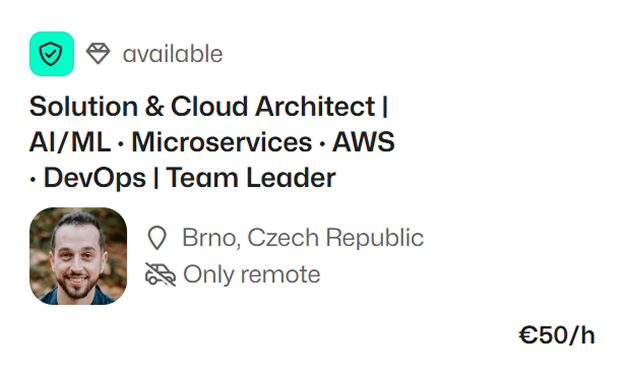
🧭 Compare yourself to the field: Search the freelancer directory by your own skills to see how freelancers in your speciality position themselves — then borrow what works and make it yours.
Need help creating an optimal freelance profile?
Get in touch with us and our team will be happy to assist you! Present yourself professionally and land clients easily with the help of freelancermap.

You might also like:

